

.jpg)
Running a business has never been easy. Today, leaders face another major pressure point: AI. By 2026, the excitement of flashy AI demos has faded. The real test is no longer about making AI look impressive. It is about making it work in real systems without breaking operations or losing customer trust.
In a recent executive roundtable, Duc Doba (CEO of Tokyo Techies) joined Masaya Mori (Hakuhodo DY Holdings) and Masahiro Chaen (Digireise) to share a grounded perspective on the next phase of AI adoption.
The consensus? The initial rush to simply "adopt" AI has hit a wall. It’s time to operationalize.

The Shift: Moving Beyond the Experimental Era
For the past few years, many businesses have been testing AI in small ways. Success often meant using AI for a few simple tasks or writing good prompts.
By 2026, things have changed. The challenge is no longer about showing what AI can do. The real goal is making AI work reliably inside everyday business operations. As Duc Doba noted during the roundtable:
“I believe 2026 will mark a shift from creating impressive AI demos to actually establishing AI workflows that function effectively in the field”
Here are the four-pillars on how to navigate this shift.
4 Pillars of an AI-Ready Organization
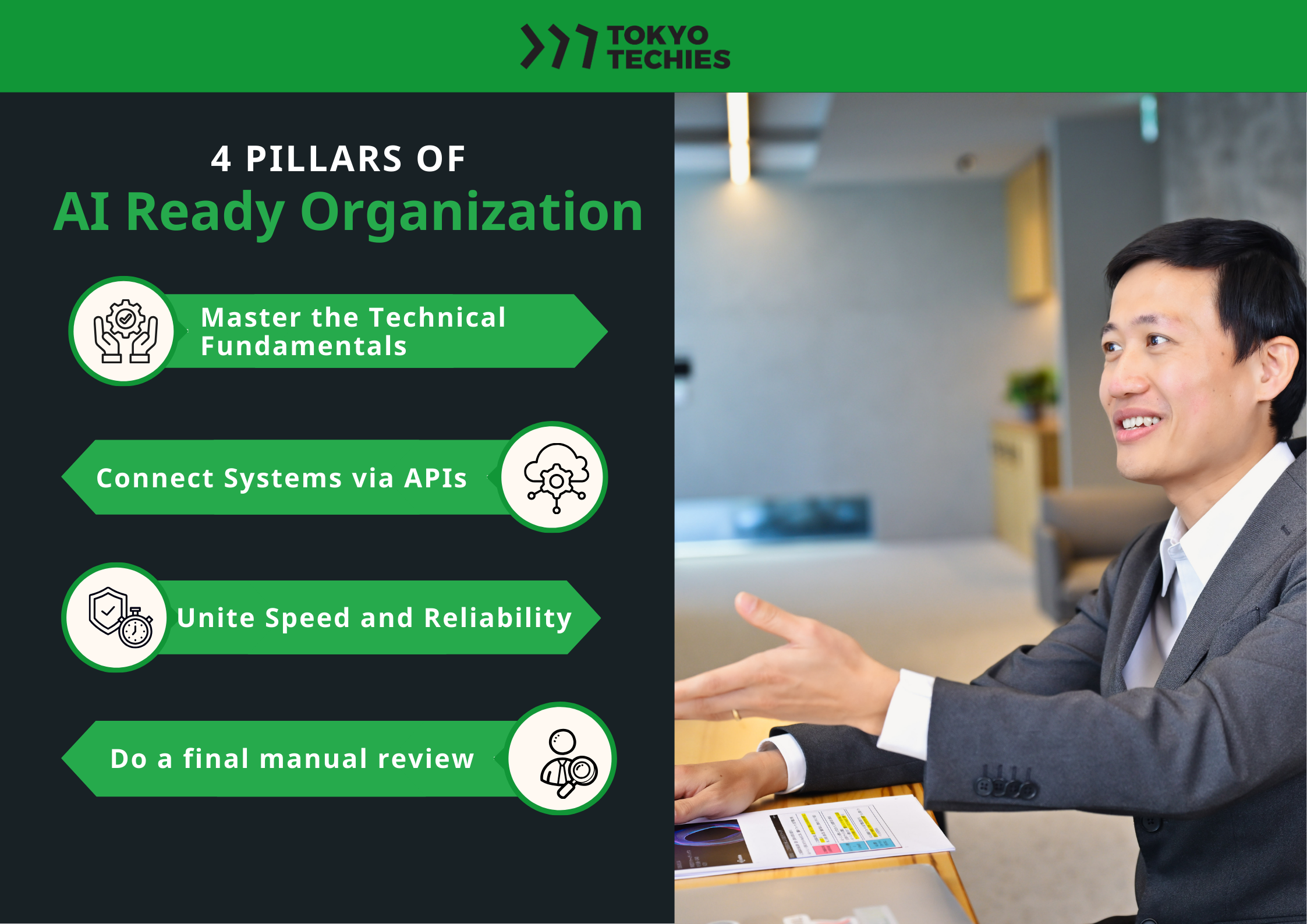
1. The 20% Rule: Why Leaders Must Stay Technical
Many CEOs delegate AI strategy entirely to IT. Duc Doba - drawing on his experience building production systems at SoftBank and Rakuten - argues that leadership must remain hands-on. He still spends 20% of his time on development to prevent "blind trust" in AI, which can leave companies vulnerable to errors.
“The important thing is not chasing AI trends, but understanding the engineer’s mindset by getting hands-on.” - Duc
When leadership is disconnected from the technical reality, they cannot spot a fragile system. Understanding the mechanics allows a CEO to separate AI hype from production reality, ensuring the company only scales what actually works.
2. Build the "Nervous System" with APIs
Many companies focus on AI models, but Duc points out a bigger problem: Infrastructure. In many companies, core systems do not have clear APIs (digital connectors), which makes AI slow and expensive to set up.
AI models are not useful if they cannot take action. Without an API-first approach, AI is like a brain without limbs. It can think, but it cannot access data or complete tasks.
Companies need to build connected systems where AI can safely move data between tools. Once these connections are ready, the next step is building AI tools quickly while still keeping high quality.
3. Balance the Speed and Quality
To scale AI successfully, companies must balance speed and reliability. Duc has led teams in both Japan and Vietnam and brings experience from both cultures.
In Vietnam, teams often focus on speed. They build quickly, launch fast, learn from real use, and improve over time. This helps new ideas move forward quickly, but it may not always meet the strict needs of large companies.
In Japan, teams focus more on reliability, careful planning, and long-term trust. This approach reduces risk but can sometimes slow down progress.
Today, companies need both speed and reliability. At Tokyo Techies, Duc combines Vietnam’s fast execution with Japan’s high quality standards. This balanced approach helps enterprise AI systems move quickly while still earning user trust.
4. Implement the "Human Guardrail"
As AI content becomes common, there is a rising risk of "AI homogenization"; where every brand and codebase starts to look the same. AI lacks emotional intelligence and an understanding of physical constraints, such as those found in IoT or sensitive care environments.
“Decision-making authority must ultimately rest with humans. Clear guardrails are essential for safely coexisting with AI.” - Duc
If you remove humans from the final loop, you lose your unique brand edge and your primary safety net. AI should support the decision, but a human must always own the outcome.
Best Practices for Transitioning to AI Operations
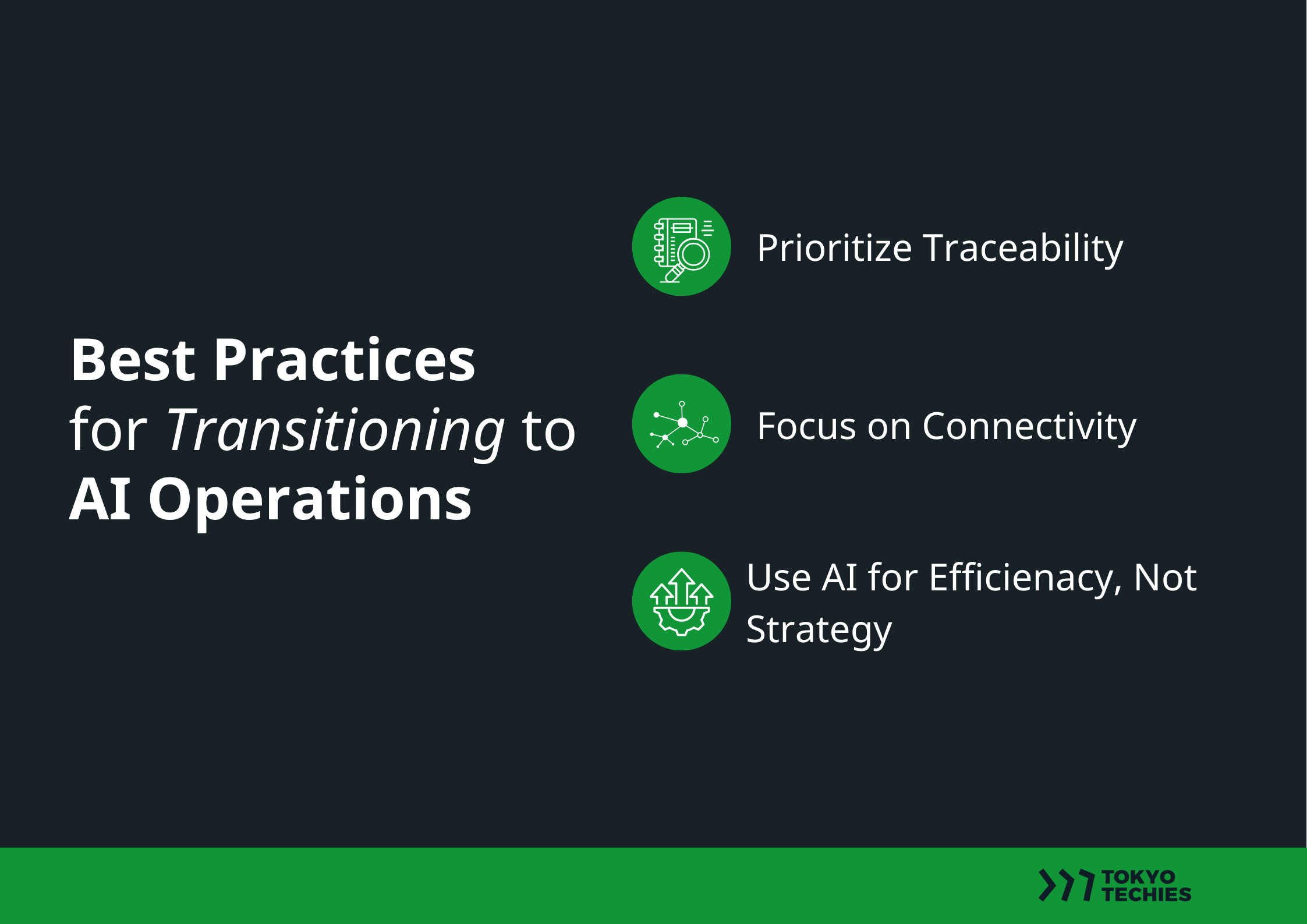
Scaling AI isn't just about the tech; it's about the rules you set around it. Here are the top recommendations for navigating the 2026 landscape:
- Prioritize Traceability: Don’t just look at the AI’s answer. Make sure you can see the steps it used to reach that answer.
- Focus on Connectivity: Avoid tools that work alone. Connect your systems so every workflow works smoothly from start to finish.
- Use AI for Efficiency, Not Strategy: Let AI handle data and routine tasks, but keep your experienced team in charge of ideas and important decisions.
Conclusion
Now success won't be measured by the quality of your prompts, but by the resilience of your workflows. Moving AI from demos to end-to-end workflows requires a shift from chasing trends to building strong, reliable systems that support daily operations.
The Bottom Line: AI makes it easy to scale, but leadership makes it safe to run. Is your organization ready to move beyond the demo?
