TL;DR
- Most enterprise software is built to impress the buyer - not to help the actual user
- Poor design leads to costly mistakes, workarounds, and burned-out employees
- The fix is simpler than most product teams think - and it starts before a single screen is designed
- Simple methods like user personas, task mapping, and usability testing can transform your product - even on a tight budget
Have You Ever Blamed Yourself for Not Understanding a Work Tool?
You stare at the screen, click through menus that make no sense, and wonder if you're just missing something obvious. You're not. Bad software is rarely the user's fault - it's a design problem. And that design problem is costing businesses millions. Sometimes, quite literally.
In 2020, a subcontractor for Citigroup was given a simple task: send a routine $7.8 million interest payment using the bank's enterprise software. What happened next is a lesson in just how badly poor design can go wrong.
The interface was dense and confusing - unclear text fields, no helpful feedback, no obvious way to confirm what you were doing. The subcontractor made a mistake while navigating it. Instead of sending $7.8 million, they transferred the entire loan amount: $900 million.
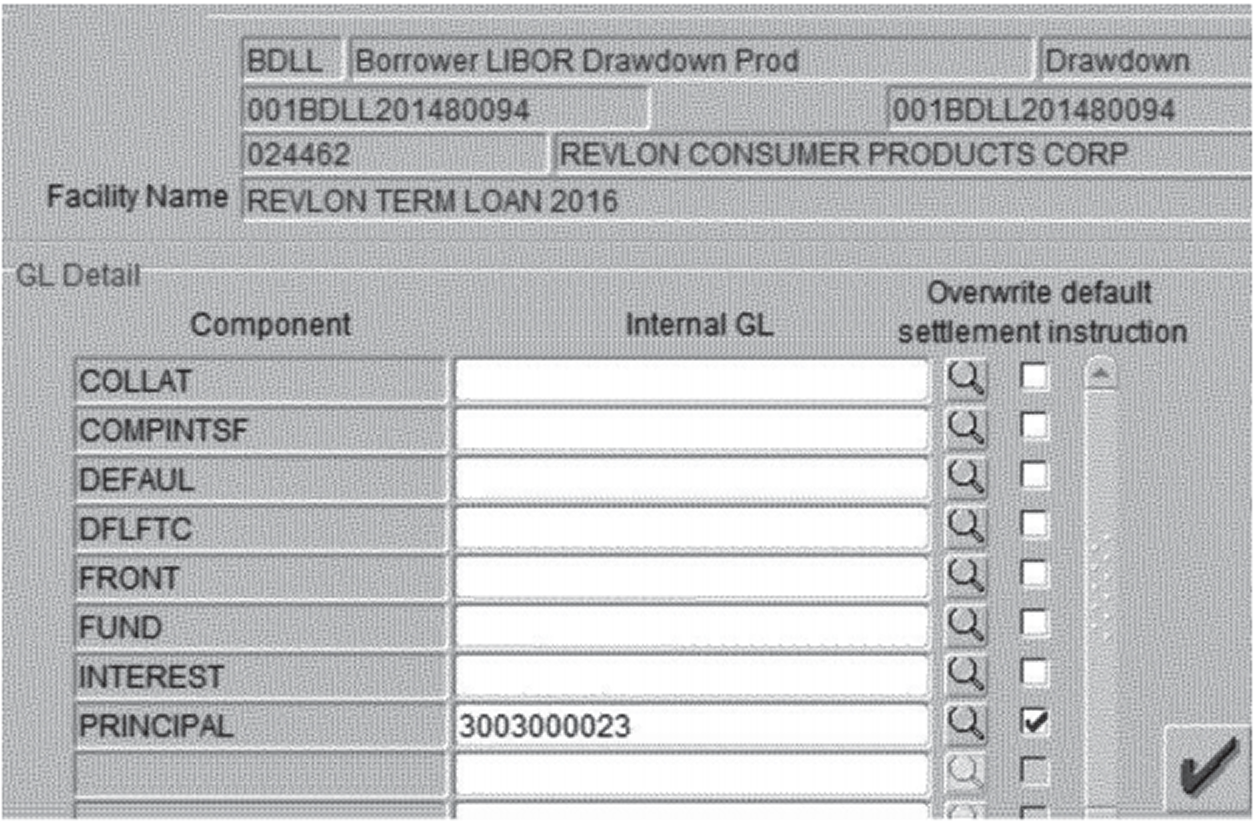
A near-billion-dollar error is an extreme case, but the everyday version of this problem is still very real. Consider:
- A logistics driver straining to read a cluttered dispatch app that contrasts poorly in sunlight
- Employees are texting job details over personal apps because the official system is too slow and complicated.
- Teams using unapproved tools to get work done - opening the company up to serious security risks
These aren't just IT headaches. They're signs of a deeper problem: software that was never truly designed for the people using it.
Design failures like these almost always come back to the same root cause - a lack of empathy for the user. When product teams don't deeply understand who their users are, where they work, and what they're dealing with day-to-day, it becomes nearly impossible to build software that actually fits their needs.
Empathy in design is the active, deliberate practice of understanding user needs, emotions, and goals, so that product teams can remove obstacles from their workflow.
The Buyer-User Disconnect
So why is enterprise software so notoriously hard to use? The answer comes down to one core problem: the person who buys the software is rarely the person who has to use it.
In everyday consumer apps, the buyer and the user are the same person. If an app frustrates you, you delete it. That instant feedback loop keeps consumer products sharp and user-friendly.
But in the business world, it's completely different. Employees don't choose their tools - they're handed them. And when an agency builds a B2B platform, the pressure is to impress the buyer: usually a CEO, a procurement officer, or a committee checking boxes on a list of technical requirements.
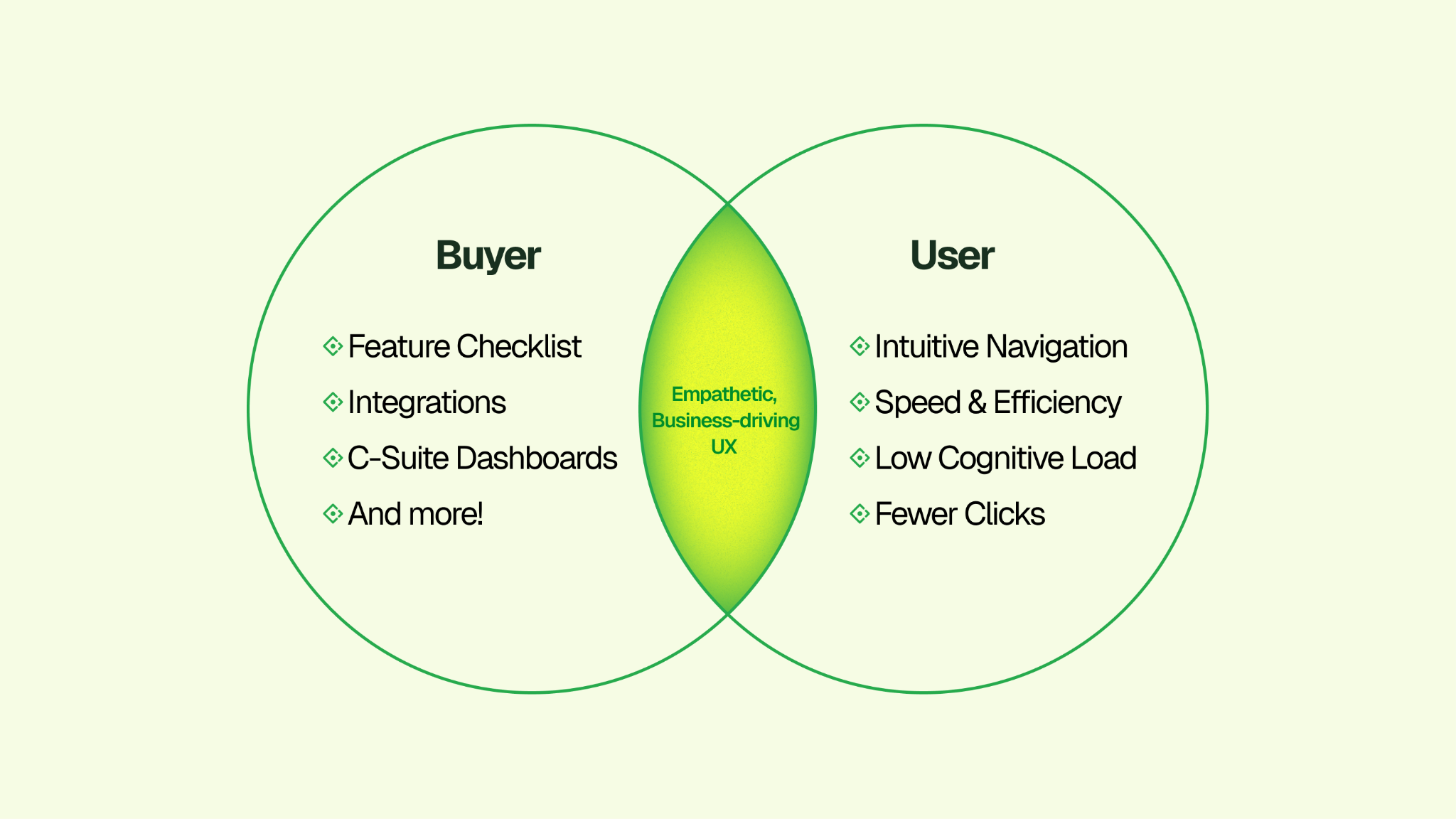
This dynamic leads to a predictable outcome: feature bloat.
- Core functions get buried under layers of secondary options
- The interface becomes cluttered and overwhelming
- Studies show that 80% of software features are rarely or never used - yet they stay, taking up space and adding confusion
Another side effect is that products get built around the technology they're required to include, without much thought for the actual humans who need to use it. The best products strike a balance early - deciding which features truly matter, then designing those features to be as intuitive as possible for the people spending the most time with them.
The Expensive Band-Aid: Training and Support
When software is too hard to use, most organizations reach for the same fix: training.
- Mandatory onboarding workshops
- Dense instruction manuals
- Hours of walkthroughs just to perform basic, everyday tasks
But here's the truth: if people need hours of training to do routine tasks, the software has already failed them. Training is a band-aid on a design problem - and an expensive one at that.
The more intuitive a product is, the faster people can start using it, and the less time and money is spent on teaching people how to navigate it.
But the benefits of good design go beyond just faster onboarding. There's a concept in behavioral psychology called cognitive ease. It describes a simple idea: when something requires less mental effort to use, it naturally feels better. People make fewer mistakes. They feel more confident. They enjoy their work more.
Research from firms like Forrester has consistently shown that investing in enterprise UX doesn't just improve productivity. It directly correlates with higher employee engagement and job satisfaction.
Think about it from the employee's perspective: being forced to use clunky, confusing software for eight hours a day isn't just inefficient. It's demoralizing. And designing software that ignores that reality isn't just bad design - it raises a real question of ethics.
Practical Advice for Product Teams
The good news is that building empathy into your process doesn't always require a huge research budget. Here are three methods that are regularly overlooked - and genuinely effective:
1. Living Personas
A persona is a realistic profile of your typical user - who they are, where they work, what they're used to, and what stresses them out.
- You don't always need a formal research project to build one
- Start by talking to your sales team and key stakeholders - they often know users better than anyone
- Ask open-ended questions: What does their day look like? What tools have they already used? What frustrates them most?
- Keep these personas visible and refer back to them during every major design decision; they act as a reality check against groupthink and gut feelings
2. Task Journey Maps
In B2B, the most useful question isn't "what's the full user journey?" - it's "what does this person need to do repeatedly, every single day?"
- Identify the most important, routine tasks your users perform
- Walk through a prototype of your product as that persona, completing the task step by step
- Pay close attention to where a tired, distracted, or stressed employee might stumble
- Those friction points are your redesign priorities
3. Usability Testing
There is no replacement for watching a real person use your product. It's a humbling experience and an invaluable one.
- No matter how carefully you design something, you carry blind spots
- Real users find the problems you can't see
- Even small-scale testing with just 5 to 8 real users regularly uncovers critical issues that the design team completely missed
- If you can only invest in one research method, make it this one
Empathy as a Business Strategy
Here's something that's easy to forget when you're deep in feature lists and sprint deadlines: your users are human.
They're not the perfectly rational, logical robots we sometimes picture when making design decisions. They are:
- Emotional and biased, just like the rest of us
- Experts in their field - but still prone to stress, fatigue, and high-pressure moments that affect their performance
- Always looking for shortcuts - and if your software doesn't offer the easiest path, they will find one somewhere else
A great design team keeps that in mind at every stage. Underneath every technical requirement, every KPI, every business objective, there is a real person with real needs and real limits.
Successful B2B design doesn't just check the buyer’s feature boxes. It actively protects the user. It respects their limitations. And it transforms their daily workflow from a frustrating chore into something that actually feels intuitive, even satisfying.
Are the internal tools at your company empowering your team - or forcing them to rely on expensive training and secret workarounds?
If you're ready to close the empathy gap in your software, contact Tokyo Techies design team. We can help you build tools that your users will love, and that genuinely move your business forward.